
- Home
- Products
- Emission Monitoring
- ABB PFM 20 Ex Dust Monitor for Hazardous Areas
ABB PFM 20 Ex Dust Monitor for Hazardous Areas
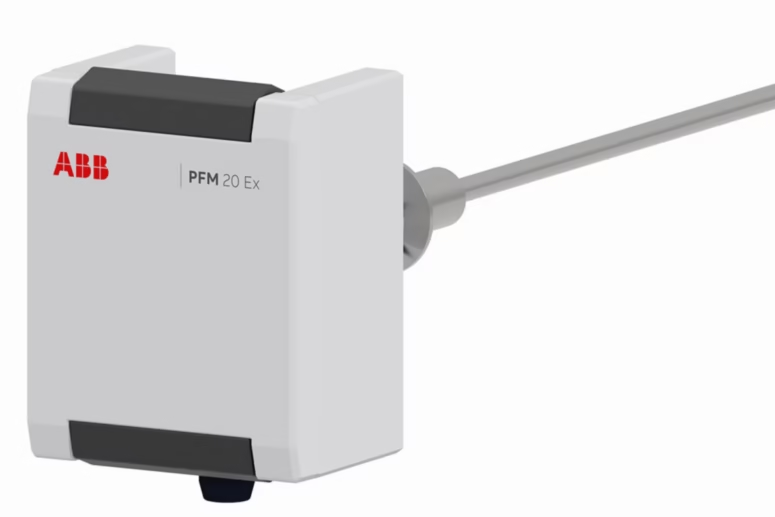
The ABB PFM 20 Ex is a specialist in-situ dust monitoring solution designed for applications where combustible dusts create potentially hazardous atmospheres. Combining proven triboelectric measurement technology with ATEX-certified construction, the PFM 20 Ex enables continuous monitoring of particulate emissions and filter performance in environments where conventional dust monitors cannot be safely deployed.
Engineered for demanding industrial processes, the PFM 20 Ex provides early detection of increasing dust emissions, helping operators identify filter failures, optimize maintenance activities, and maintain environmental compliance while ensuring safe operation in hazardous dust zones.
Designed for Hazardous Dust Environments
Many industrial processes generate combustible dusts that require certified instrumentation. The ABB PFM 20 Ex carries ATEX certification for hazardous dust atmospheres, allowing installation in applications where explosive dust hazards may be present. This makes it an ideal solution for industries where both emission control and operational safety are critical.
Typical applications include:
- Grain handling and food processing facilities
- Flour mills and drying operations
- Chemical and pharmaceutical production
- Mining and mineral processing plants
- Wood processing and biomass facilities
- Coal handling systems and power generation plants
- Continuous Filter Performance Monitoring
The PFM 20 Ex utilizes triboelectric measurement technology to continuously monitor particulate levels within exhaust ducts and stacks. By detecting changes in dust concentration, the system provides an early warning of:
- Filter bag failures
- Damaged filter media
- Process upsets
- Increasing particulate emissions
- Reduced filtration efficiency
This proactive monitoring approach helps plant operators take corrective action before emissions exceed permitted limits or production disruptions occur.