- Home
- Products
- Emission Monitoring
- ABB Advance Optima range of gas analysers
ABB Advance Optima range of gas analysers
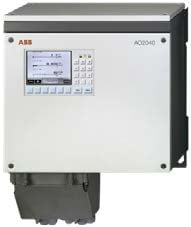
The ABB Advance Optima range is a versatile family of process gas analysers designed to deliver accurate, continuous gas measurement across a wide range of industrial applications. Combining proven measurement technologies within a modular analyser platform, Advance Optima systems provide reliable monitoring of process gases, helping operators improve efficiency, product quality, safety, and environmental compliance.
Widely trusted throughout the power, chemical, petrochemical, steel, cement, hydrogen, and industrial manufacturing sectors, the Advance Optima range offers exceptional flexibility by allowing multiple measurement technologies to be integrated within a single analyser cabinet.
Comprehensive Measurement Technologies
The Advance Optima platform supports a broad range of analytical techniques, including:
- Non-Dispersive Infrared (NDIR)
- Ultraviolet Photometry (UV)
- Paramagnetic Oxygen Measurement
- Electrochemical Sensors
- Thermal Conductivity Detection (TCD)
- Flame Ionisation Detection (FID)
This flexibility enables a single system to measure numerous gas components simultaneously, including:
- O₂ (Oxygen)
- CO (Carbon Monoxide)
- CO₂ (Carbon Dioxide)
- NOx (Nitrogen Oxides)
- SO₂ (Sulphur Dioxide)
- CH₄ (Methane)
- H₂ (Hydrogen)
- HCl (Hydrogen Chloride)
- NH₃ (Ammonia)
- Total Hydrocarbons (THC)
- Modular Design for Maximum Flexibility
A key advantage of the Advance Optima range is its modular architecture. Individual analyser modules can be configured to suit specific process requirements, allowing users to create customised gas analysis systems while maintaining a common operating platform.
Benefits include:
- Multi-component measurement from a single analyser cabinet.
- Easy expansion and modification as process requirements change.
- Reduced spare parts inventory.
- Simplified maintenance and operator training.
- High availability and long-term reliability.